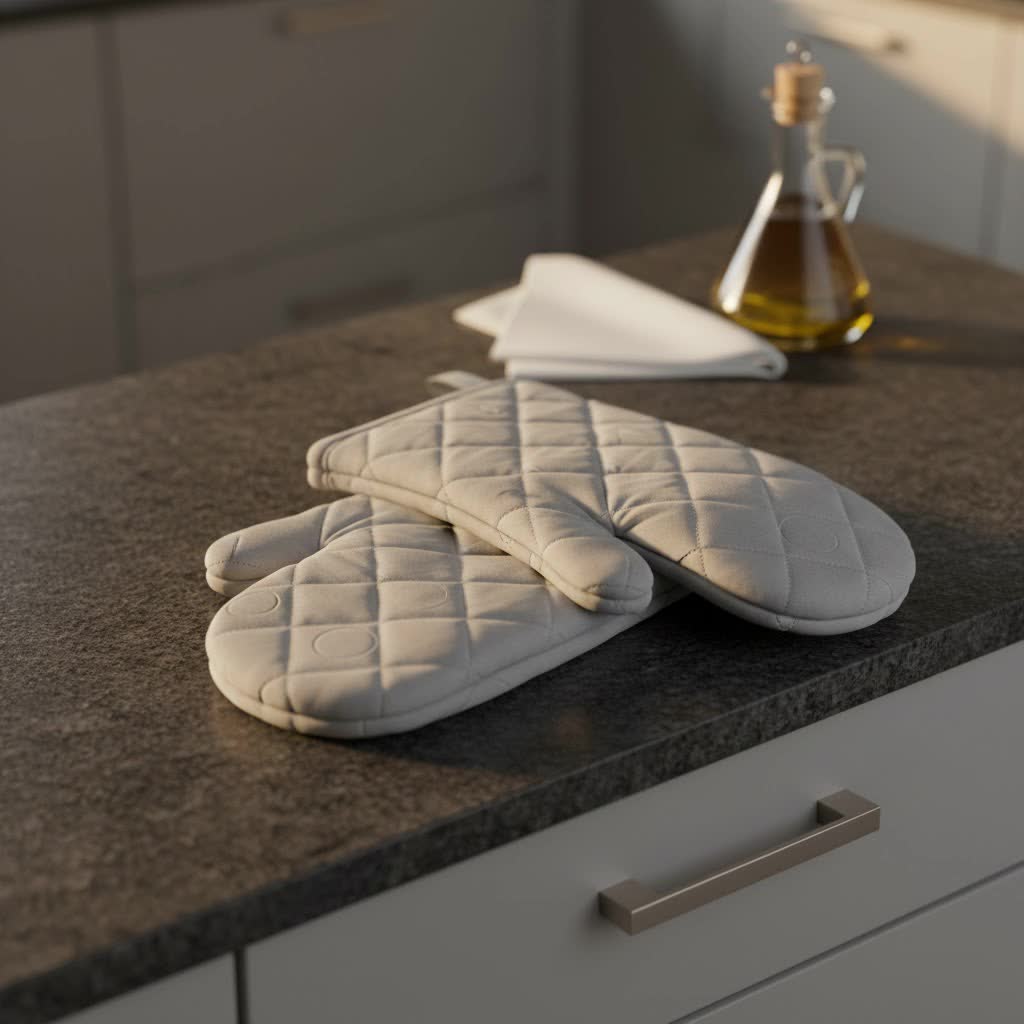
Choosing the best oven mitts for your kitchen involves selecting a pair that matches your specific cooking needs, prioritizing safety features like heat resistance, and ensuring a secure grip. The ideal oven mitts offer protection against temperatures ranging from 250°F (120°C) for cotton to over 900°F (480°C) for aramid fibers, with silicone mitts providing a versatile option up to 500°F (260°C). Key considerations include material type, length for forearm coverage, fit for dexterity, and ease of cleaning to prevent steam burns from moisture.
Common Types of Oven Mitts
The material and design of oven mitts largely determine their heat resistance, flexibility, and overall suitability for various kitchen tasks. Understanding the characteristics of each type is crucial for making the best choice.
Cotton Oven Mitts
Cotton mitts are often the most traditional and widely available option, known for their affordability and soft, pliable feel.
- Pros: They are generally inexpensive, easy to find in a wide range of colors and patterns, and offer good dexterity due to their flexibility, allowing for a comfortable grip on various cookware shapes. Many are machine-washable, making cleanup straightforward.
- Cons: Their primary drawback is lower heat resistance compared to synthetic alternatives. Cotton can quickly transfer heat, especially at higher temperatures, and may not provide adequate protection for prolonged handling of hot items. They are also prone to absorbing liquids, which can turn into dangerous steam burns if wet mitts contact hot surfaces. Cotton mitts can also scorch or catch fire at extreme temperatures.
Silicone Oven Mitts
Silicone oven mitts have surged in popularity due to their excellent heat protection and practical features.
- Pros: These mitts boast superior heat resistance, often capable of withstanding temperatures up to 500°F (260°C) or more. The silicone exterior is waterproof and stain-resistant, making them ideal for handling wet or greasy dishes and incredibly easy to clean—a quick wipe or rinse is often sufficient. Their textured surfaces provide an exceptional non-slip grip, enhancing safety when carrying heavy or slippery items.
- Cons: Silicone can sometimes be stiffer and bulkier than fabric, which might reduce dexterity for some users, making precise movements or gripping smaller handles challenging. Some testers have noted that certain silicone mitts can feel quite loose, impacting control. While effective, some users might find the internal lining can separate from the silicone shell, making them difficult to put on or take off, especially with wet hands.
Leather Oven Mitts
Often associated with grilling or heavy-duty tasks, leather mitts offer a robust and classic option.
- Pros: Leather is highly durable, offering good heat resistance and a rugged, stylish appearance. They are particularly well-suited for outdoor grilling or handling extremely hot items for short periods. They can withstand sparks and some abrasions better than fabric.
- Cons: Leather mitts tend to be more expensive and require specific care, often not being machine-washable. They can be stiff, affecting dexterity, and are not waterproof, making them unsuitable for handling steaming pots or wet items.
Aramid Fabric Oven Mitts (Nomex/Kevlar)
|
Our Picks for the Best Oven Mitts in 2026
As an Amazon Associate I earn from qualifying purchases.
|
||
| Num | Product | Action |
|---|---|---|
| 1 | BPA-Free Silicone Oven Mitts Ultra Heat Resistant up to 500°F - Oven Mitts with Thick Cotton Liner - Long Slip Resistant Pot Holders, Flexible Oven Gloves - Black 13.7" |

|
| 2 | KITCHENAID Ribbed Soft Silicone Oven Mitt 2-Pack Set, 7.5"x13", Bird of Paradise |
|
| 3 | KITCHENAID Ribbed Soft Silicone Oven Mitt 2-Pack Set, 7.5"x13", Blue Velvet |
|
| 4 | KITCHENAID Ribbed Soft Silicone Oven Mitt 2-Pack Set, 7.5"x13", Milkshake |
|
| 5 | The Ove Glove - Superior Heat & Flame Hand Protection - Pack of 2 Oven Mitts |
|
| 6 | KITCHENAID Ribbed Soft Silicone Oven Mitt 2-Pack Set, 7.5"x13", Blue Willow |
|
| 7 | KITCHENAID Ribbed Soft Silicone Oven Mitt 2-Pack Set, 7.5"x13", Beet |
|
| 8 | BPA-Free Soft Silicone 4 Piece Oven Mitts & Trivets Set - Ultra Heat Resistant Oven Mitts with Thick Cotton Liner - Long Slip Resistant Pot Holders, Flexible Oven Gloves - Aqua |
|
| 9 | KITCHENAID Ribbed Soft Silicone Oven Mitt 2-Pack Set, 7.5"x13", Aqua Sky |
|
| 10 | BPA-Free Soft Silicone Oven Mitts - Ultra Heat Resistant Oven Mitts with Thick Cotton Liner - Extra Long Slip Resistant Pot Holders, Flexible Oven Gloves - Aqua/Black 14.7" |
|
These high-performance mitts are engineered for extreme heat, often seen in professional kitchens or industrial settings.
- Pros: Aramid fibers like Nomex and Kevlar offer exceptional heat and flame resistance, providing superior protection in extremely high-temperature environments, such as commercial ovens or barbecues. They are incredibly strong and durable.
- Cons: Their specialized nature means they come at a higher price point, and they are less commonly found or needed in typical home kitchens. While offering high protection, they might not always provide the same level of comfort or flexibility as other materials.
Neoprene Oven Mitts
Neoprene, a type of synthetic rubber, is another material gaining traction in oven mitt design.
- Pros: Neoprene offers good heat resistance, excellent water and oil resistance, and a decent grip. This makes them versatile for tasks involving both heat and moisture, such as deep-frying or steaming.
- Cons: Similar to silicone, neoprene can sometimes be bulky and might limit dexterity. The material may also be less breathable than cotton.
Key Criteria for Choosing the Best Oven Mitts
Selecting the perfect oven mitt involves more than just picking a color; it’s about matching the mitt to your specific cooking needs and prioritizing safety features.
Heat Resistance
The primary function of an oven mitt is to protect against heat. Look for a clearly stated maximum temperature rating and the duration for which it can maintain insulation. Most mitts suitable for home use should withstand at least 400-500°F (200-260°C). For tasks like broiling or using Dutch ovens for bread baking, opt for mitts rated for higher temperatures, ideally 500°F (260°C) or above. Continuous exposure reduces effective protection over time.
Material
As discussed, different materials offer varying benefits. Consider your most frequent cooking tasks.
- Silicone: Best for high heat, wet or greasy items, and easy cleaning.
- Cotton (thickly padded or with rubberized texture): Good for general use, flexibility, and comfort, but less resistant to extreme heat or moisture.
- Aramid: For extreme heat applications like grilling or brick ovens where maximum protection is needed.
- Neoprene: A good all-rounder for heat, water, and oil resistance.
Many modern mitts feature hybrid designs, combining a soft cotton interior for comfort and a silicone exterior for grip and heat protection.
Length and Coverage
Adequate length is critical, especially when reaching into deep ovens or handling large, hot items. Longer mitts, typically 13-17 inches, provide essential protection for your forearms against accidental contact with hot racks or oven walls, and splatters. Some mini mitts offer less coverage, suitable for quick pinches but not for comprehensive protection.
Fit and Dexterity
An oven mitt should fit snugly enough to offer control without being overly tight or loose. A loose fit can make gripping objects precarious, increasing the risk of drops. Conversely, a too-tight fit can restrict movement. Traditional mitts offer less finger articulation than glove-style options, which allow for individual finger movement and a more precise grip on smaller items or utensils.
Grip
A secure grip is essential for safely handling heavy and hot cookware. Many silicone mitts feature textured patterns to enhance grip, particularly useful when items might be wet or greasy. Cotton mitts with rubberized patterns also offer improved traction. Look for designs that prevent slipping even when encountering moisture.
Ease of Cleaning and Maintenance
Life in the kitchen is messy. Opt for mitts that are easy to clean. Many fabric and hybrid mitts are machine-washable, simplifying upkeep. Silicone mitts are often wipe-clean only, but their non-porous surface makes this quick and effective. Always check manufacturer instructions for care.
Safety Standards
In regions like the EU and Great Britain, oven gloves are classified as Category II Personal Protective Equipment (PPE). This means they must undergo rigorous testing and bear a CE or UKCA mark, ensuring they meet essential health and safety requirements, particularly for resistance to contact heat. While not globally mandated for domestic mitts, this highlights the importance of choosing products from reputable manufacturers who adhere to high safety standards.
Comparison Table: Common Oven Mitt Types
| Type of Oven Mitt | Pros | Cons | Typical Heat Resistance |
|---|---|---|---|
| Cotton | Affordable, flexible, good dexterity, wide variety of designs | Lower heat resistance, absorbs liquids, can stain/burn | Up to 250°F (120°C) |
| Silicone | High heat resistance, waterproof, easy to clean, excellent grip | Can be bulky/stiff, may limit dexterity, can get stained | Up to 500°F (260°C) |
| Leather | Durable, good for grilling/outdoor use, stylish, spark-resistant | High cost, stiff, not waterproof, requires special care | Up to 400-500°F (200-260°C) |
| Aramid (Nomex/Kevlar) | Extreme heat & flame resistance, highly durable, industrial grade | Very high cost, less common for home use, potentially bulky | Up to 900-1472°F (480-800°C) |
| Neoprene | Good heat, water, and oil resistance, decent grip | Can be bulky, less breathable than cotton | Up to 400-500°F (200-260°C) |
Top Oven Mitts for Every Kitchen
Based on extensive testing and user reviews, certain oven mitts consistently stand out for their performance, protection, and practicality.
Best Overall: Cuisinart Silicone Oven Mitts
Praised for their robust construction and ample forearm protection, these silicone mitts offer excellent heat resistance, allowing safe handling of hot cast iron and baking dishes. Their silicone-wrapped palm provides a reliable non-slip grip. While they feature a “lobster claw” design that might feel bulky to some, their durability and high insulation make them a top choice for serious home cooks.
Best Value & Versatility: Big Red House Oven Mitts
These mitts combine a cotton exterior with a polyester lining and a rubberized texture for grip. They strike a balance between flexibility and heat protection, performing well in tests involving hot casserole dishes and Dutch ovens. They are machine-washable and offer good overall comfort and versatility for everyday baking and cooking.
Best for Extreme Heat & Grilling: Williams Sonoma Ultimate Oven Mitt
Designed for high-temperature tasks, this mitt features a silicone exterior combined with an extended cotton cuff, offering heat resistance up to 650°F (343°C). Its extra length provides maximum forearm coverage, ideal for reaching deep into ovens or handling items on a grill. The silicone remains flexible, ensuring a tight grip even on challenging cookware.
Expert Insights for Oven Mitt Safety
Beyond choosing the right mitts, understanding proper usage and common pitfalls can drastically improve your kitchen safety.
> “If the oven mitt or your hand was wet and the oven mitt was exposed to oven temperatures of 350 degrees Fahrenheit or 400 degrees Fahrenheit, a third-degree burn could happen in as little as one second, depending on the material.” – Dr. Semra Peksoz, Associate Professor at Oklahoma State University, Department of Design, Housing and Merchandising
- Beware of Moisture: A damp oven mitt can be incredibly dangerous. Moisture rapidly conducts heat, turning a protective barrier into a steam burn hazard. Always ensure your oven mitts are completely dry before use.
- Avoid Using Towels: While tempting in a pinch, kitchen towels rarely offer sufficient heat protection or a secure grip. Their loose ends can also snag on oven racks or catch fire. Always use dedicated oven mitts or pot holders.
- Check for Wear and Tear: Regularly inspect your mitts for thinning spots, tears, or excessive staining. Compromised insulation means reduced protection. Replace them when they show signs of significant wear.
- Consider Stitching: Research suggests that cross-stitching in oven mitts, especially under pressure from fingers, can accelerate heat transfer, creating hot spots. While not always visible, well-designed mitts minimize this risk.
Conclusion
Choosing the right oven mitts is an investment in your kitchen safety and cooking confidence. By understanding the different materials available—from flexible cotton to highly protective silicone and specialized aramid fabrics—and considering factors like heat resistance, fit, length, and grip, you can select a pair that perfectly suits your culinary needs. Even the best oven mitt requires proper care and mindful use to ensure maximum protection against the high temperatures of your kitchen. Don’t compromise on safety; equip yourself with the best tools to handle the heat with ease and peace of mind.
What’s your biggest challenge when selecting new oven mitts for your kitchen?
Frequently Asked Questions
Frequently Asked Questions
Are silicone oven mitts better than cotton for kitchen use?
Yes, silicone oven mitts generally offer superior heat resistance, are waterproof, and provide a better non-slip grip compared to cotton. They are ideal for handling hot, wet, or greasy items, often withstanding temperatures up to 500u00b0F (260u00b0C). Cotton mitts are more flexible and affordable but provide less heat protection and can absorb liquids, posing a steam burn risk.
What maximum temperature can oven mitts typically withstand?
Oven mitts typically withstand temperatures ranging from 250u00b0F (120u00b0C) for basic cotton mitts to over 900u00b0F (480u00b0C) for specialized aramid or grilling gloves. For most home baking and roasting, mitts rated for 400-500u00b0F (200-260u00b0C) are recommended. Always check the manufacturer's specifications for the exact maximum temperature rating.
What is the recommended length for effective oven mitt protection?
Longer oven mitts, typically 13 to 17 inches, are highly recommended for effective protection. This length protects not only your hands but also your forearms from accidental burns on hot oven racks or dish edges, especially when reaching into deep ovens. Shorter mitts may suffice for quick grabs from toaster ovens or stovetops.
How should I properly clean and maintain my oven mitts?
Cleaning instructions vary by material. Most all-fabric mitts (cotton, linen) can be machine-washed and air-dried. Silicone mitts are often wipe-clean, or if they have a fabric cuff, some hybrid models can be machine-washed inside out. Always refer to the care tag on your specific oven mitts to prevent damage and maintain their protective qualities.
What safety standards apply to oven mitts in the EU and Great Britain?
In the European Union and Great Britain, oven gloves are classified as Category II Personal Protective Equipment (PPE). This means they must undergo type-examination and testing against standards like EN ISO 21420:2020 (general requirements) and EN 407:2020 (thermal risks) to receive a CE or UKCA mark. These standards ensure the mitts provide adequate protection against contact heat and do not cause harm to the wearer.
Cooking gear we tested in our own kitchens
Free PDF — preheat times measured on 10 popular air fryers.

I’ve been using a pair of aramid fiber mitts for a few weeks now, and they really do stand up to high heat. I do a lot of baking at higher temperatures, and these keep my hands totally safe. My only minor complaint is that they’re a little stiff at first, making it a bit harder to grab smaller items with precision. They’re breaking in though.
These mitts are exactly what I needed! I was always worried about dropping hot dishes because my old ones had no grip. The secure grip on these is amazing, and I feel so much safer carrying heavy roasts. Plus, they protect against temperatures up to 500°F, which is perfect for all my baking needs.
I finally upgraded my old, thin cotton mitts and these silicone ones are a game-changer! I love how easy they are to clean, and I don’t have to worry about steam burns anymore when grabbing things from the oven. The grip is fantastic too, even with greasy pans. Definitely worth the investment for peace of mind.
I was hoping for better forearm coverage with my new mitts, but these are just a bit too short for my liking. I still find myself being super careful when reaching deep into the oven. The heat resistance is decent for everyday use, but I wish they extended further up my arm for more protection. Next time I’ll look for a longer style.